Most AI builds break in production. Ours don't.
You've probably been handed an AI demo that fell apart the week real users arrived. We're a senior AI studio that ships RAG systems, chat and voice agents, data pipelines, and automation — production-grade in three to four weeks, verified by a lead architect at every step and auditable before you sign off.


It works in the demo.
Production asks harder questions.
Every AI vendor can ship something that works in a meeting. The teams we talk to have already shipped a version that impressed everyone right up until a real user, a compliance reviewer, or a security audit asked it a question the demo never had to answer.
The demo that can't survive an audit
No way to prove it didn't invent a figure
No way to prove tenant separation
No record of why it was built this way
The question was never whether AI can do the work. It's whether anyone can prove it did the work safely — and that's the part most builds skip.
What we hear before teams call us
The chatbot demoed perfectly. Then a real user asked it something specific, and it answered with a number that didn't exist anywhere in our data.
We had no way to prove where that number came from — because it didn't come from anywhere real.
Founder, pre-seed AI startup
Three ways to work with us
Start with an MVP, commission a full build, or keep us on retainer — every one runs on the same SOP, ships production-ready, and leaves you owning the code.
MVP (Minimum Viable Product)
$2,000-3,000 · 4 weeks
Any software — AI or not — in production and usable by real users in three to four weeks. Strong cloud architecture from day one, so even an existing user base can migrate in without running into major issues.
- Real users on it in 3–4 weeks — production, not a demo
- Architected for millions of users and future phases from day one
- Security and compliant data handling from the first commit
- Hypercare and a warranty at phase end — this is phase 1
Full Software Implementation
$6,000 - $8,000
The full platform, delivered in phases — each scoped to three to four weeks and priced per phase. Most products mature in three or four, each building on the MVP's multi-tenant foundation.
- 3–4 week phases, ~$2,000–3,000 each; most mature in 3–4
- Multi-tenancy matured: custom domains, branding, operator dashboard
- AI systems: eval + synthetic-data pipelines, feedback capture, prompt versioning
- Mobile apps, plus CRM, ERP, and WhatsApp/Instagram/Facebook integrations
Retainer
$300 / month
Ongoing support and maintenance for a product we built — keeping what's live healthy and reliable. New features and revamps aren't part of this; those become a change order, or a phase of their own.
- Technical Customer Support
- Continuous Maintenance of the codebase
- Bug fixes and enhancements within 24 hours
A predictable shape, proposal to warranty
Six phases from a signed architecture proposal to a 30-day warranty. The build — proposal through UAT — lands in three to four weeks; hypercare and the warranty run after you're live.
Software architecture & project overview
Before any code: the architecture, the tradeoffs behind it, and a project overview you sign off on. You approve the plan and the cost design first — nothing gets built on assumptions.

Three to four weeks isn't a shortcut.
It's an operating model.
AI runs at every step of how we work. Every output it produces is verified by a lead architect before it moves to the next step — which is why the timeline holds without trading away quality, cost, or security to get there.
AI handles the volume
- Implementation drafted across the stack, not typed line by line
- Every change swept against the codebase for regressions and dead paths
- Test scaffolding, fixtures, and migration drafts generated up front
- Research and first-pass documentation running in parallel, not after
A lead architect owns the judgment
- Architecture and system design
- Cost design — and the tradeoffs behind every call
- Security boundaries, tenant isolation, and the review before handover
- Every deviation from spec recorded as a numbered ADR
Nothing an AI produces reaches your codebase unverified.
This is the part the tooling still doesn't do. AI writes plausible code all day. It doesn't weigh what a design costs to run at month twelve, decide where a tenant boundary has to sit, or know which tradeoff you'll regret later — those calls come from engineers who have had to live with them. That is the work we kept for ourselves.
Why we're qualified to run it
We didn't bolt AI onto how we work last year. We have built AI systems in production for three years — from back when shipping AI was still an argument rather than a roadmap item — and engineered our own delivery around it so its output holds up instead of being taken on faith. That span includes AI systems built to survive binding regulatory review, the EU AI Act among them.
The smarter middle ground between a no-code prototype, an agency demo, and hiring a full team.
AI runs every step of the build; a lead architect verifies every output before it moves. The speed comes from that model — the discipline comes from the ADRs, grounding guards, and security reviews that ship with every build.
Ships in weeks, not quarters
- Real Solutions PH
- No-Code / DIY
- Agency Demo
- In-House Hire
Grounding guard from the first commit
- Real Solutions PH
- No-Code / DIY
- Agency DemoMaybe
- In-House HireMaybe
Tenant isolation proven, not asserted
- Real Solutions PH
- No-Code / DIY
- Agency DemoMaybe
- In-House HireMaybe
Security review across every surface before handover
- Real Solutions PH
- No-Code / DIY
- Agency Demo
- In-House HireMaybe
Every deviation recorded as a numbered ADR
- Real Solutions PH
- No-Code / DIY
- Agency Demo
- In-House HireMaybe
You own the code & architecture outright
- Real Solutions PH
- No-Code / DIY
- Agency DemoMaybe
- In-House Hire
No hiring or management overhead
- Real Solutions PH
- No-Code / DIY
- Agency Demo
- In-House Hire
| What you actually get | Real Solutions PH | No-Code / DIY | Agency Demo | In-House Hire |
|---|---|---|---|---|
| Ships in weeks, not quarters | ||||
| Grounding guard from the first commit | Maybe | Maybe | ||
| Tenant isolation proven, not asserted | Maybe | Maybe | ||
| Security review across every surface before handover | Maybe | |||
| Every deviation recorded as a numbered ADR | Maybe | |||
| You own the code & architecture outright | Maybe | |||
| No hiring or management overhead |
Maybe means it happens on some engagements, if you ask and the timeline allows — not that it ships by default.
See what we've built
Systems deployed to production, not left as a sandboxed demo — each one built by the same two architects who'd scope yours.
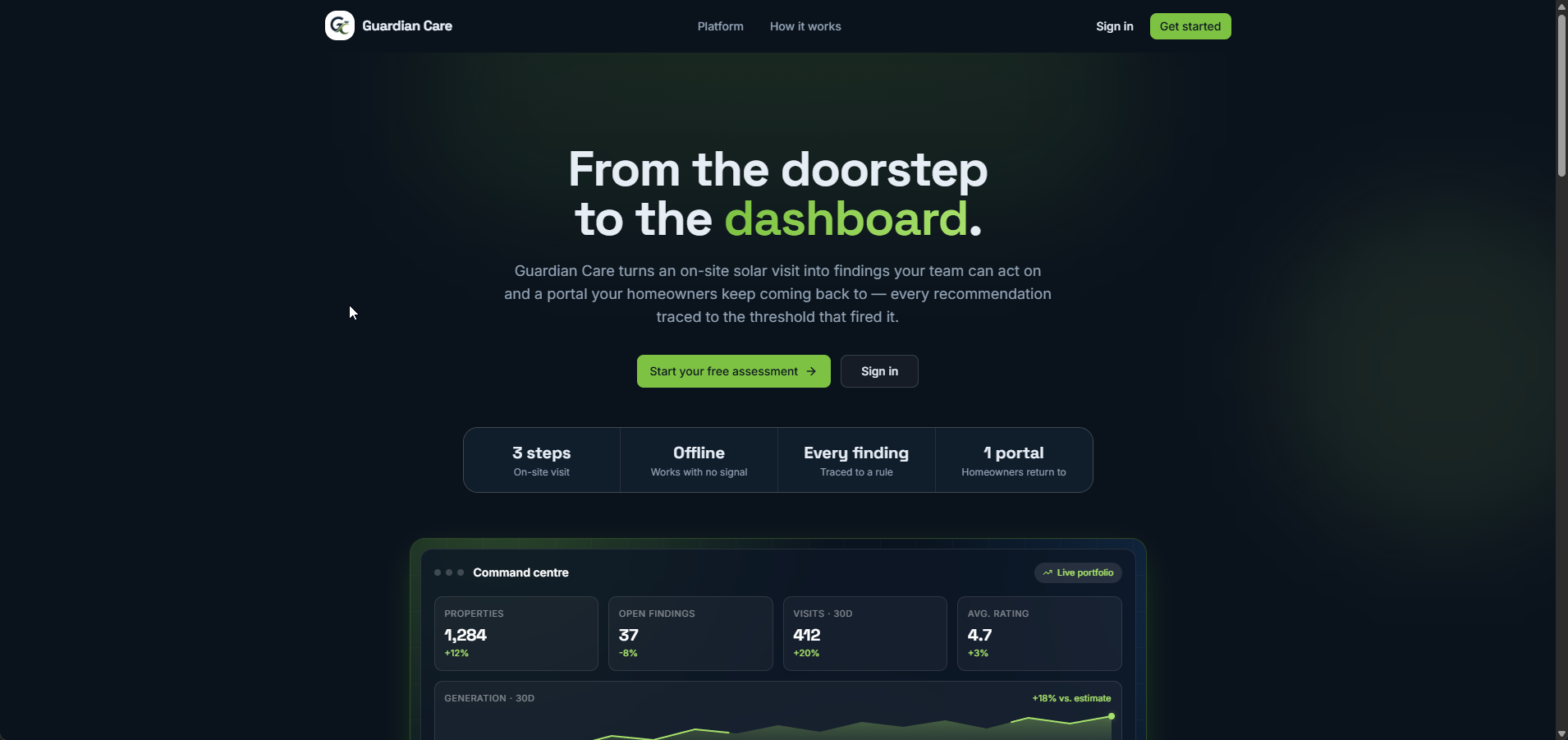
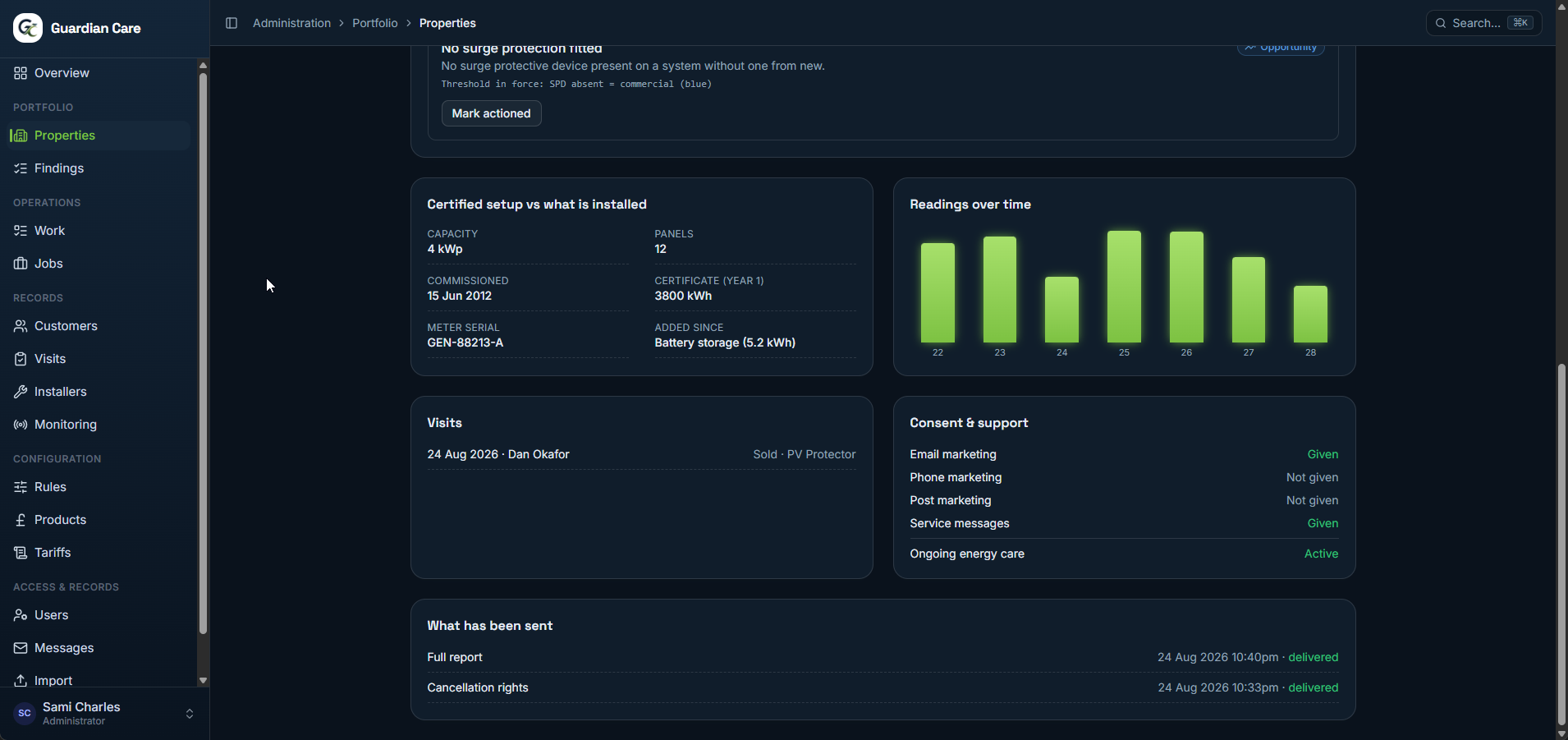
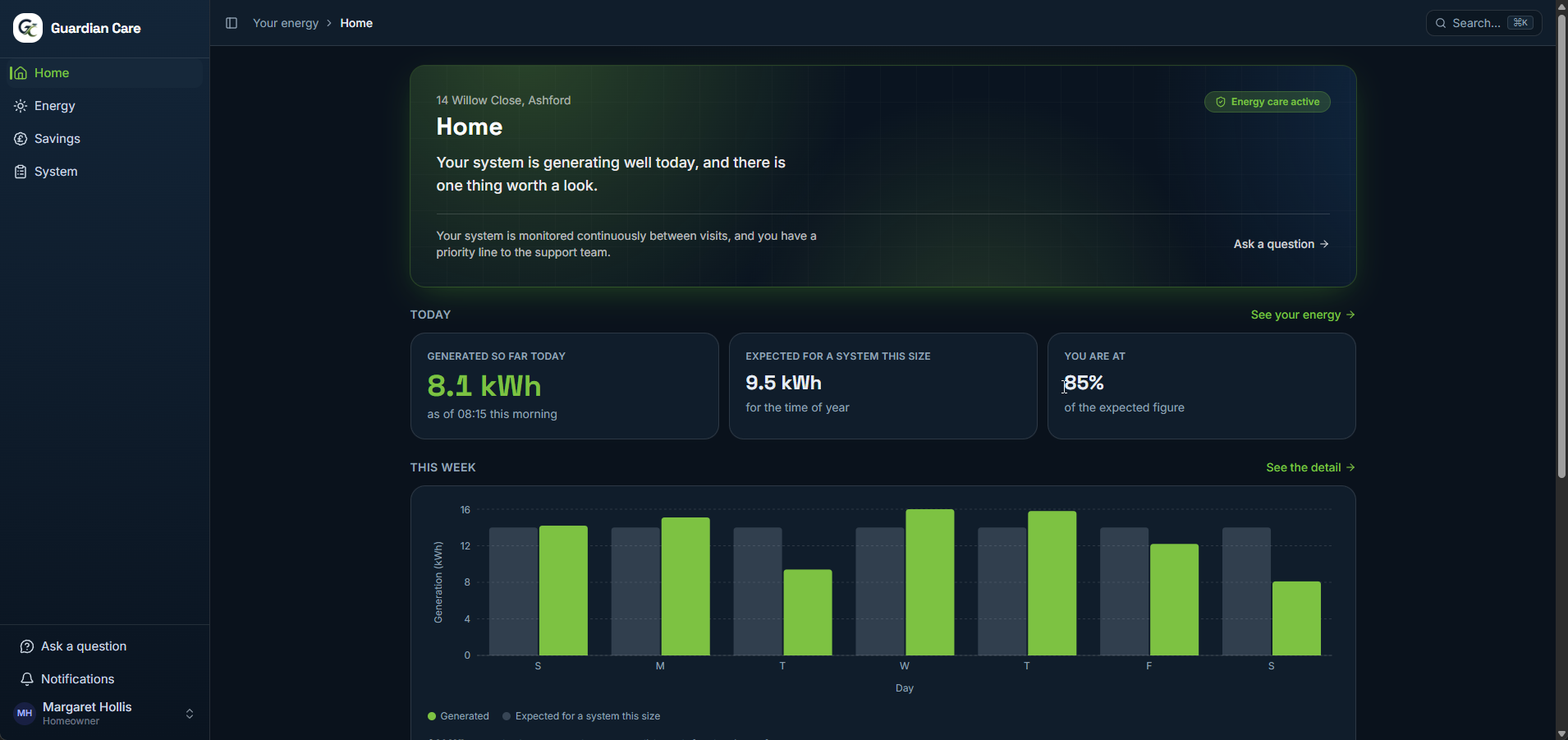
Guardian Care — Solar Assessment & Monitoring
Solar assessment and monitoring platform that transforms on-site solar visits into actionable findings. Features an offline-ready on-site assessment flow, a command centre for portfolio management, homeowner portal for energy insights, and a versioned rules engine for audit-trail transparency. Every finding is traced to the exact threshold that triggered it.

Polymath — Personal Knowledge & Recall System
A personal knowledge and spaced-repetition system spanning eight study fields (AI hardware, software, biohacking, neuroscience, biochemistry, electrical engineering, business/sales, and research methodology). Captures material from multiple sources, enables retrieval via voice and text with citations back to the exact passage, and uses layered questioning (recall → explain → apply) with automatic weak-area detection. Integrates research literature feeds to resurface forgotten concepts and material from underperforming topics.
AI-Assisted Risk Monitoring Platform
We develop AI-assisted fintech monitoring and real-time risk-management systems. This engagement is under a publication bar, so the line above is the whole of what can be said about it. The build ran the way every engagement here does: architecture decisions written down as ADRs, and a lead architect reviewing each step before it moved on.
15 projects across integration, automation, and software development
Built by two architects, not a bench
You won't be handed off to an account manager relaying your spec to engineers you've never met. You work directly with the two people who scope, build, and review the system.

Co-Founder & CEO — Full-Stack & Mobile Engineering
Former lead full-stack engineer at an AI startup, now CEO. He owns client relationships end to end — reaching out to local and international clients, client care, and delivery — and builds across full-stack, mobile, UX design, DevOps, cloud, and database engineering.

Co-Founder & CTO — Cloud & AI Engineering
Former lead full-stack engineer and head of engineering at an AI startup, now CTO. He owns architecture, implementation plans, and infrastructure, and leads AI and data engineering across every build.
Start with a scoping call.
Tell the two architects who'd build it what you need, and they'll tell you plainly what it takes — no sales deck, no pressure to sign anything.